Battling Post-Plateau Decline? Your Gas Compression Strategy is the Key to Extending Field Life
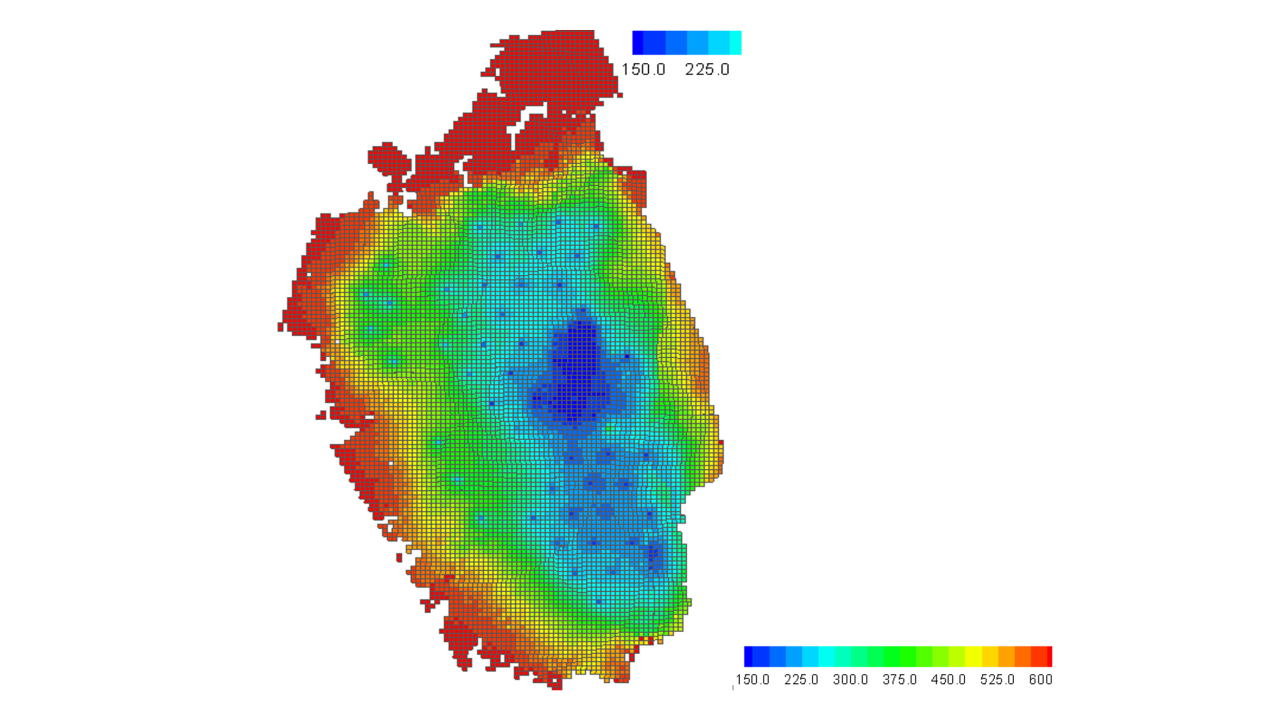
For many natural gas fields, the "post-plateau" phase marks a difficult but inevitable transition. As reservoir pressure declines, production rates start to drop, threatening the long-term profitability and viability of the asset. While this decline is a natural part of a field's life cycle, it doesn't have to signal the beginning of the end. The right gas compression strategy can be the single most important factor in maximizing recovery and extending field life far beyond what's possible with a passive approach.
The Challenge of Declining Pressure
During the early stages of a field's life, high reservoir pressure naturally pushes gas to the surface. This is the "plateau" phase, a period of stable, high-volume production. As more gas is extracted, this pressure begins to fall. Eventually, the reservoir pressure drops below the required wellhead pressure for gas to flow efficiently. This is where the decline begins.
Without intervention, operators face a grim choice: either accept lower production rates and a shorter field life, or incur high costs to drill new wells that may only offer temporary relief. However, this is a challenge that can be overcome with a proactive and strategic approach to gas compression.
Strategy Over Machinery
At Eta Energy Solutions, we’ve seen firsthand how a proactive compression strategy can transform declining fields. It starts with asking the right questions:
Are your compression units sized for future reservoir conditions—not just today’s?
Is your compression staged to adapt to changing flow regimes?
Have you modelled the impact of compression on reservoir recovery factor?
Are you integrating compression with artificial lift and surface facility upgrades?
The answers can reveal untapped potential—and prevent costly missteps.
Compression: More Than Just a "Band-Aid"
Effective gas compression is far more than a simple fix for low pressure. When implemented correctly, it's a dynamic, integrated part of a long-term production strategy. By lowering the suction pressure at the wellhead, compressors effectively "pull" gas from the reservoir, counteracting the natural decline. This not only maintains production but also enables the recovery of gas that would otherwise be trapped in the reservoir, leading to a significant increase in the ultimate recovery factor.
Key considerations for a successful gas compression strategy include:
Customization is Crucial: There is no one-size-fits-all solution. The optimal compression system depends on a multitude of factors, including reservoir characteristics, gas composition, flow rates, and existing infrastructure. A thorough engineering analysis is essential to design a system that is both efficient and scalable.
Modularity and Phased Implementation: A common mistake is to install an oversized compression system from day one. A better approach is to use modular compression units that can be added in phases as reservoir pressure continues to decline. This allows for a more capital-efficient approach, with investments being made only when and where they are needed.
Efficiency and Reliability: A compressor's job is to run continuously. Poorly designed or unreliable equipment can lead to costly downtime and lost production. Investing in high-quality, reliable, and energy-efficient compressors is critical for long-term operational success.
Integration with Facilities: A compressor is just one component of a larger system. Its performance is directly linked to the rest of the surface facilities. A holistic approach that considers the entire system—from the wellbore to the processing plant—is necessary to unlock maximum value.
Our Approach
We use our unique CONCEPTCOMPROCESSOR™ process to help oil and energy firms select the optimum gas compression system in order to cost-effectively enhance plateau and post-plateau production.
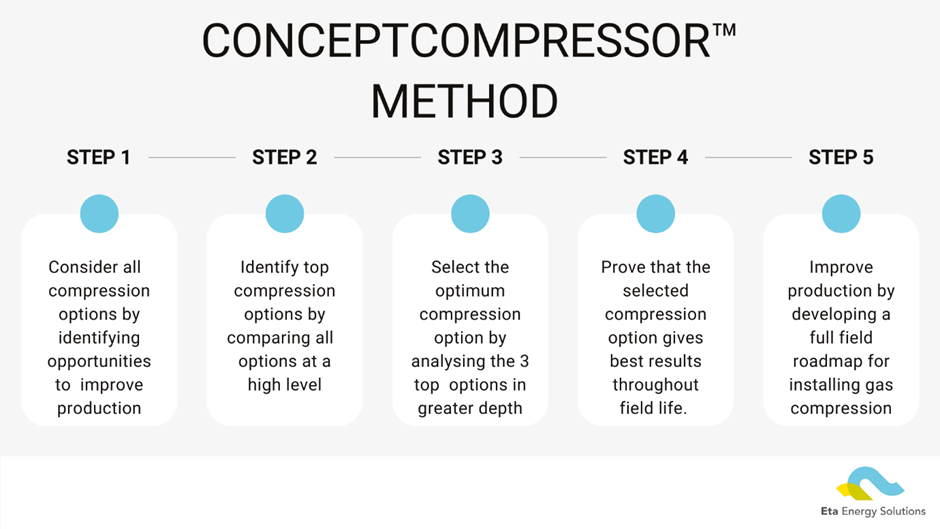
CONCEPTCOMPRESSOR™ has a unique 5-step process that includes:
1. Opportunity Identification - consider all potential development options by identifying opportunities and requirements to extend plateau and improve production via compression.
2. Options Analysis - ensure that top options are identified by comparing and analysing all identified field development options at a high level.
3. Shortlist Analysis - make sure that the optimum option is selected by analysing the 3 top-performing options in greater detail.
4. Concept Proof - Demonstrate the ability of the selected optimum option to give the best results in all life-of-field scenarios by carrying out a proof of concept.
5. Development Roadmap - extend plateau and improve production using compression by creating a full field development roadmap.
CONCEPTCOMPRESSOR™ 5-STEP METHOD
Real-World Impact
In one project, our team helped a mid-life gas-condensate field extend its plateau by 3+ years through a phased compression installation. The result? A significant increase in ultimate recovery and a multi-million-dollar uplift in NPV.
This wasn’t magic—it was engineering foresight, reservoir understanding, and strategic execution.
The Path to Extended Field Life
For operators facing post-plateau decline, the path forward is clear: a strategic and forward-looking gas compression plan is essential. By treating compression as a core part of the asset management strategy, companies can extend the economic life of their fields, maximize ultimate recovery, and secure a more profitable future for their operations.
The time to think about compression isn't when production has already plummeted, but as a field approaches its plateau. By planning ahead, companies can turn a period of natural decline into a new era of optimized production.